
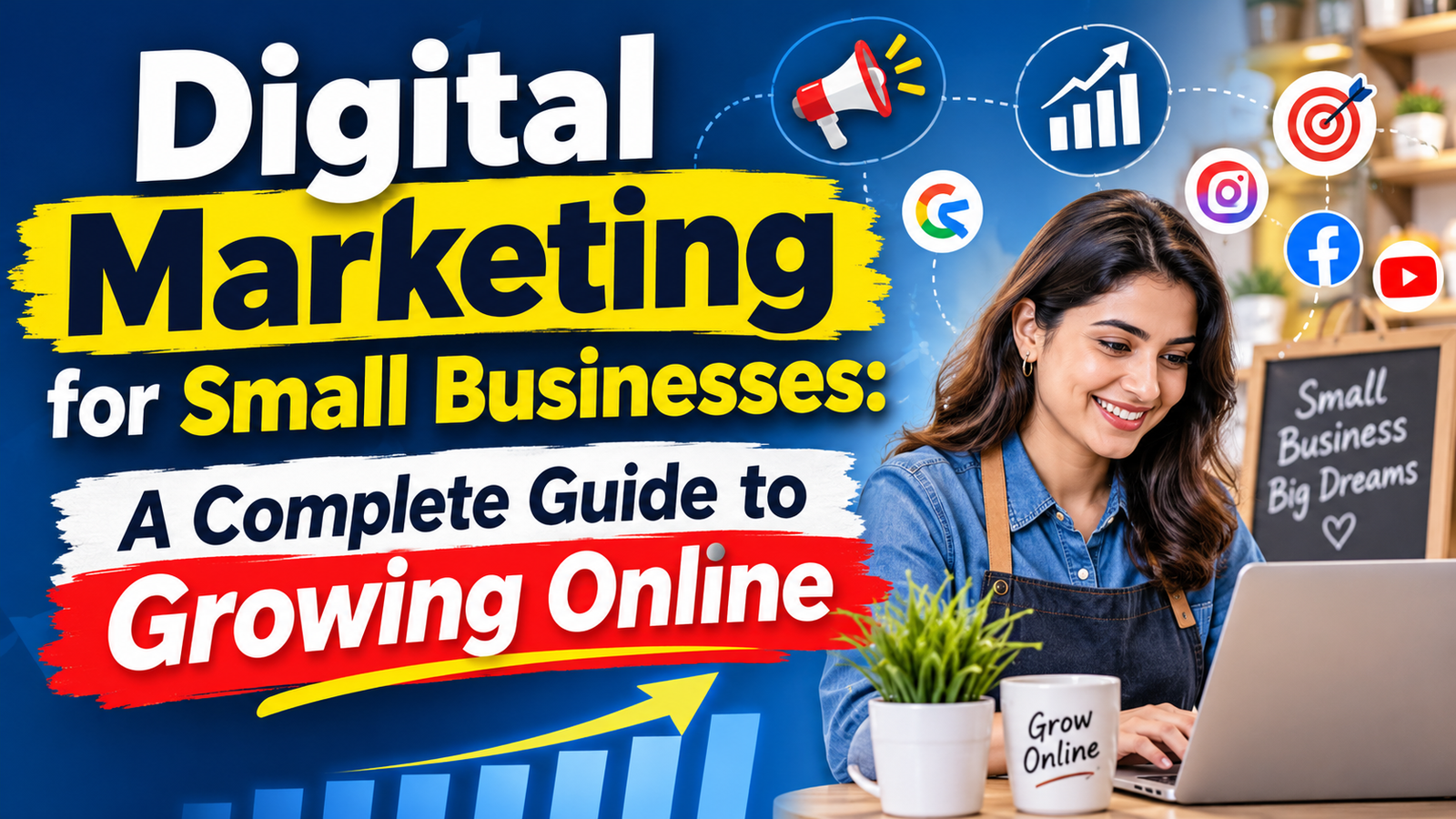
Running a small business is challenging, especially when you are trying to attract new customers and compete with established brands. Today, having a good product or service is not always enough. Your potential customers also need to find your business online. This is where digital marketing for small businesses becomes important.
Digital marketing helps businesses connect with their target audience through search engines, websites, social media, email, and online advertising. With the right strategy, even a small business can build brand awareness, reach potential customers, and develop a stronger online presence.
Whether you run a local shop, an online store, a startup, or a service-based company, this guide explains practical digital marketing strategies that can help your business grow.
What Is Digital Marketing for Small Businesses?
Digital marketing for small businesses refers to promoting products and services through online platforms and digital channels. Instead of depending only on traditional advertising, businesses can use the internet to reach people who are interested in their products or services.
For example, a local clothing store can use Instagram to showcase new collections, Google Search to attract people looking for clothing stores, and a website to display products and receive enquiries.
Some common digital marketing channels include:
- Search Engine Optimization (SEO)
- Social Media Marketing
- Content Marketing
- Email Marketing
- Pay-Per-Click Advertising (PPC)
- Website Design and Development
- Local SEO
Each channel serves a different purpose, but combining them can help create a consistent marketing strategy.
Why Is Digital Marketing Important for Small Businesses?

Small businesses often work with limited budgets and resources. Digital marketing provides different ways to reach potential customers, communicate with audiences, and promote services.
Here are some important benefits.
1. Improve Online Visibility
Your potential customers may search online before choosing a product or service. If your business does not have a strong online presence, people may find your competitors instead.
A professional website, optimized content, and an active social media presence can help customers discover your business.
2. Reach the Right Audience
Digital marketing allows businesses to focus their efforts on specific audiences based on interests, locations, demographics, and online behaviour.
For example, a restaurant in Gilgit can focus its local marketing efforts on people searching for restaurants in Gilgit rather than advertising to an unrelated audience.
3. Build Customer Trust
Customers want to understand a business before making a purchase or contacting a service provider.
A professional website, helpful blog articles, genuine customer reviews, and consistent social media content can help establish credibility.
4. Generate More Business Opportunities
Digital marketing can bring visitors to your website, encourage enquiries, and introduce your services to potential customers.
A clear contact page, enquiry form, WhatsApp contact option, and useful service information make it easier for interested visitors to take the next step.
5. Measure Marketing Performance
Online marketing gives businesses access to useful performance information.
You can monitor website traffic, search performance, social media engagement, advertising costs, and customer enquiries to understand which activities are working.
7 Effective Digital Marketing Strategies for Small Businesses
A successful digital marketing strategy does not require using every platform at once. Start with the channels that match your business goals and target audience.
1. Build a Professional Business Website
Your website is one of the most important parts of your online presence. It gives potential customers a place to learn about your business, explore your services, and contact you.
A professional business website should include:
- A clear and informative homepage.
- Detailed service or product pages.
- An About Us page.
- Contact information and enquiry forms.
- Mobile-friendly design.
- Fast loading performance.
- Clear calls to action.
Your website should also communicate what makes your business different.
For example, a digital agency should clearly explain its web development, SEO, and marketing services instead of simply displaying a list of technical skills.
2. Invest in Search Engine Optimization (SEO)
Search Engine Optimization helps improve your website’s visibility in organic search results.
When people search for products, services, or information related to your business, SEO helps search engines understand your website and its content.
Important SEO activities include:
Keyword Research: Identify the search terms your potential customers use when looking for your products or services.
On-Page SEO: Optimize page titles, headings, URLs, meta descriptions, images, and website content.
Technical SEO: Improve website structure, mobile usability, indexing, and loading performance.
Local SEO: Improve your visibility for location-based searches and maintain accurate business information.
Content Optimization: Publish useful articles that answer your audience’s questions.
For example, a web development company serving local businesses could create useful content around website development, business websites, and website maintenance.
SEO is a long-term marketing activity. Rankings and traffic are not guaranteed, so businesses should monitor performance and improve their strategy over time.
3. Use Social Media Marketing
Social media platforms allow businesses to communicate directly with their audiences and showcase their products or services.
Depending on your target customers, you can use platforms such as:
- Facebook for community engagement and business promotion.
- Instagram for visual content, products, and brand awareness.
- LinkedIn for professional networking and B2B marketing.
- TikTok for short-form videos and creative content.
- YouTube for educational videos, tutorials, and demonstrations.
A simple social media strategy can include:
- Share educational content.
- Publish product and service updates.
- Show behind-the-scenes activities.
- Answer customer questions.
- Share genuine customer feedback.
- Maintain a consistent posting schedule.
Focus on creating content that provides value rather than publishing promotional messages every day.
4. Create Helpful Content
Content marketing is the process of creating and sharing useful information to attract and engage your target audience.
Small businesses can use different content formats, including:
- Blog articles.
- How-to guides.
- Educational videos.
- Infographics.
- Case studies.
- Social media posts.
- Frequently asked questions.
For example, a digital marketing agency can publish articles explaining SEO basics, website design tips, social media strategies, and online business growth.
Helpful content can answer customer questions and introduce people to your products and services.
When writing blog articles, focus on real customer problems, relevant keywords, clear headings, and practical solutions.
5. Try Email Marketing
Email marketing helps businesses communicate with people who have chosen to receive their updates.
You can use email campaigns to:
- Introduce new products and services.
- Share company updates.
- Send newsletters.
- Announce special offers.
- Share educational resources.
- Follow up with interested customers.
For better results, organize your email contacts into relevant groups and send messages that match their interests.
Always use permission-based email lists and provide an unsubscribe option.
6. Use Paid Online Advertising
Paid advertising can help businesses reach potential customers through targeted campaigns.
Popular advertising platforms include:
- Google Ads.
- Facebook Ads.
- Instagram Ads.
- LinkedIn Ads.
- YouTube Ads.
For example, a local service provider can use Google Ads to reach people searching for a particular service in their area.
Before launching an advertising campaign, define your target audience, budget, campaign objective, and expected results.
Start with a manageable budget, monitor performance, and improve campaigns based on actual data.
7. Focus on Local SEO
Local SEO is particularly useful for businesses that serve customers in specific locations.
When someone searches for a nearby service, local search results can help them discover relevant businesses.
Here are some practical local SEO activities:
- Create and verify a Google Business Profile.
- Use accurate business name, address, and phone information.
- Select relevant business categories.
- Add genuine business photos.
- Keep opening hours updated.
- Encourage honest customer reviews.
- Respond professionally to customer feedback.
- Create location-relevant website content.
For example, a business serving customers in Gilgit can provide clear information about its services and service area to help local customers find it.
How to Create a Digital Marketing Strategy for Your Small Business
Having multiple marketing channels is useful, but they need to work together. A clear strategy helps you organize your activities and focus on business goals.
Follow these five steps to get started.
Step 1: Define Your Business Goals
First, decide what you want to achieve through digital marketing.
Your goals might include:
- Increasing website visitors.
- Generating more customer enquiries.
- Improving brand awareness.
- Increasing online sales.
- Reaching customers in new locations.
- Building a stronger social media presence.
Choose goals that are realistic and relevant to your business.
Step 2: Understand Your Target Audience
Identify the people most likely to purchase your products or services.
Consider their:
- Age group and interests.
- Location.
- Needs and challenges.
- Online behaviour.
- Purchasing preferences.
Understanding your audience helps you choose the right marketing channels and create relevant content.
Step 3: Choose the Right Marketing Channels
You do not need to invest in every digital marketing channel immediately.
Choose platforms based on where your audience spends time and how they search for your services.
For example:
- A local shop may prioritize Google Business Profile and Facebook.
- An online store may focus on SEO, Instagram, and paid advertising.
- A professional service provider may prioritize website SEO and LinkedIn.
- A new startup may begin with a website, content marketing, and social media.
Step 4: Create a Content Calendar
A content calendar helps you plan and organize marketing activities.
You can create a simple weekly schedule:
| Day | Content Activity |
|---|---|
| Monday | Educational social media post |
| Tuesday | Blog article or SEO content |
| Wednesday | Product or service showcase |
| Thursday | Customer-focused content |
| Friday | Tips and industry insights |
| Saturday | Short video or reel |
| Sunday | Review and plan upcoming content |
Adjust this schedule according to your business capacity and audience.
Step 5: Monitor and Improve Your Results
Review your marketing performance regularly.
Useful tools include:
- Google Analytics 4 for website traffic and user activity.
- Google Search Console for search performance and indexing information.
- Google Business Profile for local business performance information.
- Meta Business Suite for Facebook and Instagram performance.
Look at the data, identify what works, and make improvements to your strategy.
Common Digital Marketing Mistakes Small Businesses Should Avoid
Even a well-planned marketing campaign can struggle when basic mistakes are repeated.
Avoid these common problems:
1. Not Having a Website: Depending entirely on social media can limit how much information customers can access about your business.
2. Ignoring SEO: Without proper website optimization, potential customers may struggle to discover your business through search engines.
3. Posting Without a Strategy: Random social media posts may not communicate a consistent brand message or support business goals.
4. Targeting Everyone: Trying to reach every possible customer can waste marketing resources. Define your target audience first.
5. Ignoring Mobile Users: Make sure your website works properly on smartphones and tablets.
6. Expecting Instant Results: SEO, content marketing, and brand development require consistent effort. Avoid expecting immediate success from every campaign.
7. Not Tracking Performance: Without measuring results, it becomes difficult to identify successful activities and areas that need improvement.
How HNAZ Digital Can Help Your Business Grow Online
Building a successful online presence requires more than simply creating a website or publishing social media posts. Businesses need a consistent approach that connects website development, search engine optimization, content, and digital marketing.
At HNAZ Digital, we focus on helping businesses establish and strengthen their digital presence through practical digital solutions.
Our services include:
- Website Design & Development: Professional websites designed around your business goals and customer needs.
- Search Engine Optimization: Website optimization to improve search visibility and attract relevant organic traffic.
- Social Media Marketing: Content planning and social media strategies to build brand awareness and audience engagement.
- E-commerce Solutions: Online store development to help businesses showcase and sell their products.
- Graphic Design: Creative visual content for professional branding and marketing.
- Digital Marketing: Marketing solutions designed to support business growth and online visibility.
Whether you are starting a new business or improving an existing one, having the right digital strategy can help you move forward.
Ready to strengthen your online presence? Explore HNAZ Digital and discover how our services can support your business goals.
Frequently Asked Questions (FAQs)
1. What is the best digital marketing strategy for a small business?
The best strategy depends on your business goals and target audience. However, a combination of professional website development, SEO, social media marketing, and helpful content is a good starting point for many small businesses.
2. How much does digital marketing cost for a small business?
Digital marketing costs vary depending on the services, platforms, advertising budget, and business requirements. Some activities, such as creating organic social media content, can be started with limited resources, while paid advertising and professional marketing services require additional investment.
3. Can a small business do digital marketing without a large budget?
Yes. Small businesses can begin with a professional website, Google Business Profile, organic social media content, and basic SEO. They can expand their marketing activities as their business grows.
4. How long does SEO take to show results?
SEO does not have a fixed timeline. Results depend on website condition, competition, content quality, industry, and other factors. Businesses should monitor their search performance and make consistent improvements.
5. Why does a small business need a website?
A website provides a central online location where customers can learn about products, explore services, view business information, and make enquiries. It also creates opportunities to attract visitors through search engines.
6. Is social media marketing enough for a small business?
Social media can help build brand awareness and customer engagement, but relying on it alone may limit your online marketing opportunities. Combining social media with a website, SEO, and other relevant channels creates a more complete strategy.
7. How can I choose the right digital marketing agency?
Look for an agency that understands your business goals, communicates clearly, explains its marketing approach, and provides transparent reporting. Review its portfolio, relevant experience, services, and proposed strategy before making a decision.
Conclusion
Digital marketing for small businesses is an important part of building a strong online presence. From professional website development and SEO to social media marketing, content creation, and paid advertising, each channel can contribute to reaching potential customers.
The key is to understand your audience, choose suitable marketing channels, create useful content, and regularly evaluate your performance.
You do not need to implement every strategy at once. Start with the activities that matter most to your business and improve your approach as you learn what works.
HNAZ Digital is here to help businesses take the next step toward a stronger digital presence. Explore our services and start building your online growth strategy today.